
Where farming and nature meet
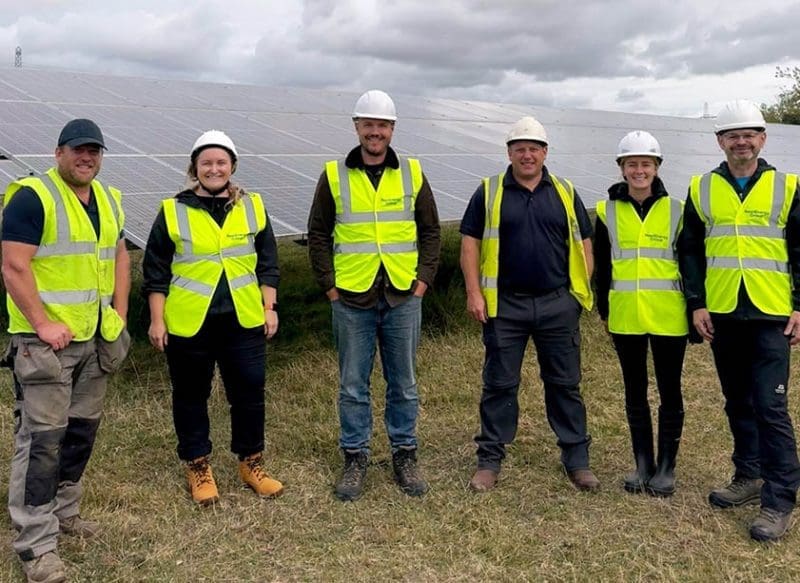
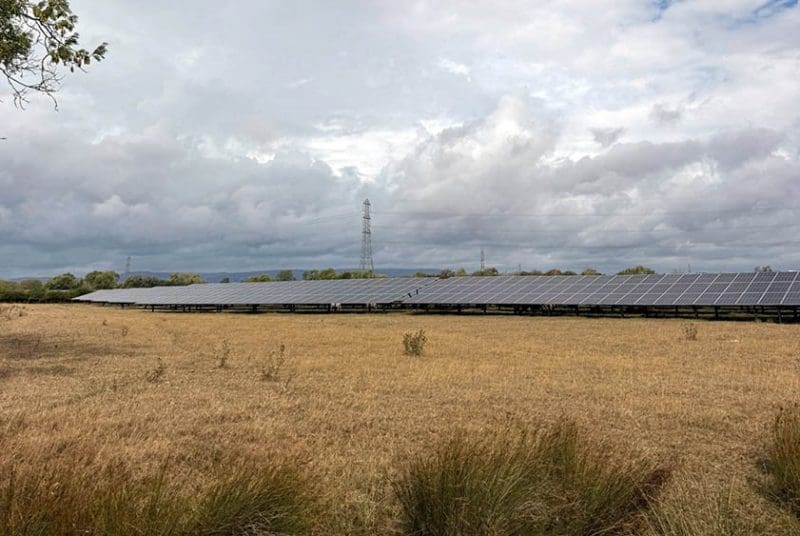
Ahead of consultation with the community for the proposed Future Energy Llanwern solar project this autumn, Lisa visited the neighbouring operational solar farm on the Gwent Levels.
One of the first things she spotted, apart from sheep grazing underneath the panels and local swans gliding in a stream, was the protected Shrill Carder Bee making the most of thistles on the farm.
From sceptics to stewards
Brothers Alex and Dan Price, who farm on the Gwent Levels, guided the visit and explained how solar energy has helped them navigate challenges like market volatility and increasing government environmental regulations.
Their family, custodians of their land for three generations, were initially sceptical when EnergyMyWay proposed the solar farm on part of their land in 2010. However, they soon recognised the investment potential.
Determined to maintain their role as land managers, they established Llanwern Solar Services (LSS) with other landowners to help oversee operations and maintenance around the 75MW site near Newport.
The brothers said solar energy has provided financial stability, allowing them to reinvest in their wider agricultural business. With solar helping them weather market fluctuations, they have also been able to maintain traditional farming practices and embrace modern standards.
The brothers also highlighted the benefits of solar energy for biodiversity
Since introducing solar to their farm, they have seen more wildlife, particularly small mammals, and a thriving ecosystem. Additionally, they have also planted a wildflower meadow supporting the local protected Shrill Carder Bee population and managing mitigation areas for Lapwing.
While the solar project is still early in its stages, the brothers are already seeing positive signs and that they believe they have become better stewards of the land; with financial investment from the solar project providing for conservation.
The brothers acknowledged that solar remains a contentious topic in Wales, but said initial concerns from local residents had faded once the project was in place.
Public perception is shifting
The Public Attitudes to Solar Report 2025 by Solar UK and Copper Consultancy reveals a clear and encouraging trend: public support for solar energy continues to grow. However, 42% of respondents still cited the ‘impact on local wildlife’ as their top concern when it comes to solar farm development.
Real-world examples like Price Farm demonstrate that solar and biodiversity can thrive together, highlighting the importance of effectively communicating this message to the public. As solar deployment increases, so too does the need for clear, evidence-based engagement with communities across the UK.
Encouragingly, our data show that support for solar is notably higher among those living near existing solar farms, suggesting that developers’ efforts to engage communities throughout the project lifecycle are making a positive impact.
Despite this progress, minimising environmental impacts remains the public’s leading concern in both 2023 and 2024. This is a critical issue, particularly given the government’s ambition to reach nearly 60GW of installed solar capacity by 2030.
Achieving this goal will require a significant number of new projects and with technologies evolving rapidly, public understanding and support will be vital.
A key area of improvement has been awareness around biodiversity benefits. In 2023, 42% of respondents were unaware that solar farms could enhance biodiversity. In 2025, that figure has dropped to just 11%, marking a substantial shift in public perception.
This progress reflects more effective communication around biodiversity net gain and greater visibility of successful, nature-positive solar developments. It’s clear that industry efforts to inform, educate, and showcase best practices are beginning to shift the narrative – from scepticism to opportunity.
Continuing to build this understanding will be crucial as the sector scales up to meet the UK’s energy and climate goals. Live examples such as Llanwern are valuable examples of how solar and nature can cohabit and thrive, as well as making the case for the sector, and proposed developments such as Future Energy Llanwern.